John Cade, a repatriation hospital and the lithium paper that nearly vanished
In 1949 an Australian repatriation psychiatrist reported that lithium calmed mania. Toxicity, a patient's death and a US salt-substitute scandal kept the finding on the shelf for two decades.
Key points
- John Cade's September 1949 paper in the Medical Journal of Australia reported that lithium salts calmed 10 patients with mania. It grew out of guinea pig experiments built on a hypothesis that turned out to be wrong.
- His first patient, a man identified as W.B., responded dramatically but later died of lithium toxicity. In 1949 US salt substitutes containing lithium chloride were also recalled after poisonings, and Cade gave up the drug.
- Mogens Schou's controlled trials in Denmark (1954 onward) rescued lithium. The FDA approved it for acute mania in 1970, and it remains a mainstay of bipolar maintenance treatment, with the same narrow margin of safety that nearly sank it.
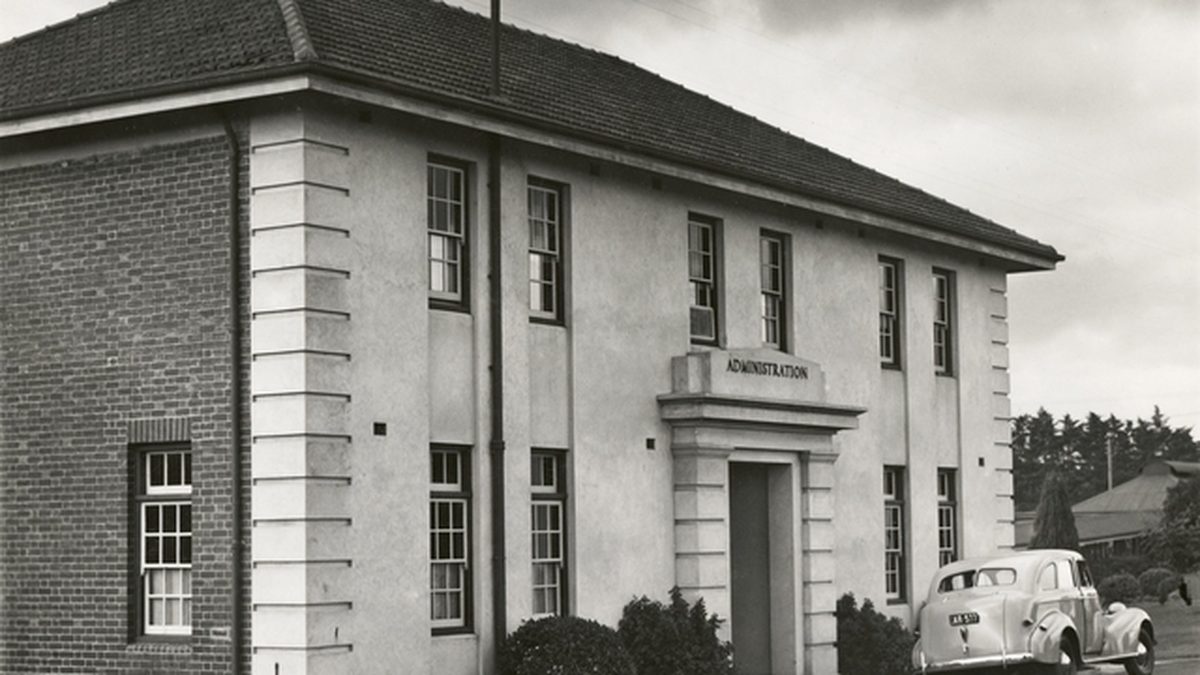
Few landmark discoveries in psychiatry came from a smaller operation. John Frederick Joseph Cade (1912–1980), born in Horsham, Victoria, spent much of the Second World War as a prisoner of war in Changi, Singapore. After the war he was working at the Bundoora Repatriation Mental Hospital outside Melbourne, a hospital for ex-servicemen, when he started the experiments that led to lithium.
A wrong theory and a right observation
Cade suspected that mania came from too much of some circulating substance, in the way thyrotoxicosis comes from too much thyroid hormone. To find it he injected concentrated urine from manic patients into guinea pigs and compared how toxic it was with urine from other patients. Uric acid seemed to change that toxicity, and it dissolves poorly, so he used the most soluble urate salt he could get: lithium urate.
Then came the observation that mattered. Guinea pigs given large doses of lithium carbonate became lethargic and stopped responding to stimulation for an hour or two. Cade read this as a calming effect specific to lithium. Later work by Schou and others found that the lethargy came from toxic overdose, not from any special calming action. The theory behind the experiment was wrong, but it still pointed Cade toward the right drug. He took lithium himself to judge whether it was safe before giving it to patients.
W.B. and the 1949 paper
On 29 March 1948 Cade began treating a 51-year-old man who had been in chronic manic excitement for five years. In the paper he appears only as W.B.; later accounts name him Bill Brand. He improved enough to be discharged from the hospital. Then he stopped taking lithium, relapsed, and was readmitted.
In "Lithium salts in the treatment of psychotic excitement," published in September 1949, Cade described 10 patients with mania who improved on lithium citrate or carbonate. He also described 6 patients with schizophrenia who became quieter but did not otherwise improve, and 3 patients with melancholia who showed no benefit. The study was open and uncontrolled. Historians who later compared his case notes with the published paper found differences that made lithium look somewhat better than the records did. W.B.'s course after publication shows the danger. Back on lithium, he developed toxicity and died in 1950. After the early toxicity deaths, Cade stopped prescribing lithium.
A bad year for lithium
Lithium's reputation suffered elsewhere at the same time. In February 1949 JAMA published warnings about lithium chloride salt substitutes such as Westsal, which were sold to cardiac patients on sodium-restricted diets. Corcoran, Taylor and Page described seven cases of poisoning and judged lithium a contributing cause of death in two. The American Medical Association and the FDA moved quickly to take these products off the market. An ion with a reputation as a poison was a hard sell, and lithium remained out of favor in the United States until the early 1970s.
Schou's rescue
The Danish psychiatrist Mogens Schou took Cade's report seriously and tested it properly. In 1954 Schou, Juel-Nielsen, Strömgren and Voldby published a trial of lithium in 38 patients with mania. It was partly open and partly randomized against placebo. In 1967 Baastrup and Schou argued in Archives of General Psychiatry that long-term lithium prevented recurrences. The next year, Blackwell and Shepherd's Lancet rebuttal, "Prophylactic lithium: another therapeutic myth?", challenged that claim. The answer came in 1970 with a double-blind discontinuation trial (Baastrup and colleagues, Lancet), in which patients switched to placebo relapsed and those kept on lithium did not. That same year the FDA approved lithium for acute mania, helped by US trials run partly through the NIH. A maintenance indication followed in 1974.
Legacy
Cade's paper became the most-cited article in the history of the Medical Journal of Australia. He became superintendent of Royal Park Hospital in Melbourne in 1952 and stayed until he retired in 1977. He did not carry on with lithium research himself. A 2014 MJA retrospective called the episode "an extraordinary experiment with a not-so-ordinary element."
Seventy-seven years on, lithium is still a reference drug for bipolar disorder. It is the standard that newer maintenance agents are compared against, even though its mechanism is still debated. Its history holds two lessons. Even a small, uncontrolled report can matter. Some of the best drugs in psychiatry can also be dangerous, and their benefits depend on careful monitoring.
Sources
- Lithium salts in the treatment of psychotic excitement (Cade JFJ, Med J Aust 1949;2:349–352) — Medical Journal of Australia
- Cade's lithium: an extraordinary experiment with a not-so-ordinary element — Medical Journal of Australia (2014)
- Cade, John Frederick Joseph (1912–1980) — Australian Dictionary of Biography
- The treatment of manic psychoses by the administration of lithium salts (Schou M et al., J Neurol Neurosurg Psychiatry 1954) — PubMed
- The history of lithium therapy — PubMed Central
- A sense of calm in bipolar disorder: the clinical trials of lithium — NIH Intramural Research Program