Emil Kraepelin split psychosis in two, and DSM still uses his divide
Kraepelin made long-term course the basis of psychiatric diagnosis and separated dementia praecox from manic-depressive insanity. He also promoted race hygiene, and his institute trained the architect of Nazi sterilization law.
Key points
- In the sixth edition of his textbook (1899), Emil Kraepelin divided the major psychoses into dementia praecox, with a chronic, deteriorating course, and manic-depressive insanity, with an episodic course and little lasting decline.
- His central idea was that diagnosis should follow how an illness unfolds over years, not only how it looks in a single cross-section. DSM's duration criteria and its separate chapters for schizophrenia and bipolar disorder both reflect that idea.
- Kraepelin also campaigned against alcohol, promoted race hygiene and eugenics, and founded the Munich institute where Ernst Rüdin later helped shape Nazi sterilization policy.
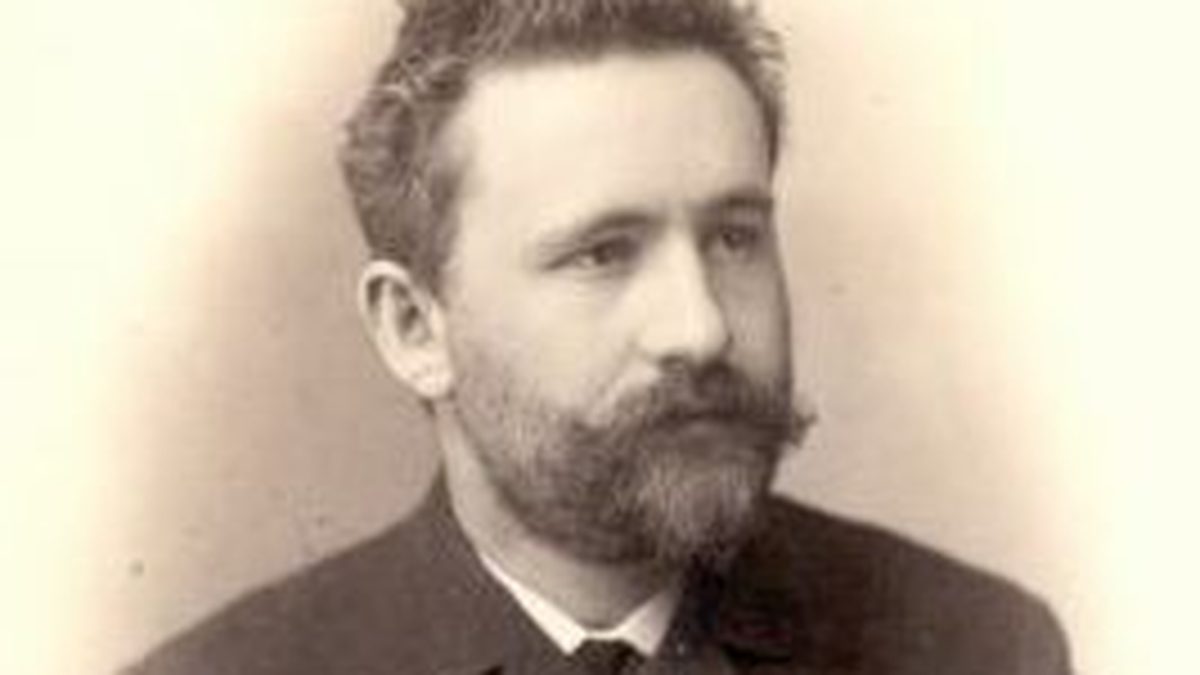
Every time a clinician waits to see whether a first psychotic episode resolves, recurs or slowly erodes a person's functioning before settling on a diagnosis, they are using Emil Kraepelin's method. Kraepelin was born in Neustrelitz on 15 February 1856 and died in Munich on 7 October 1926. Over roughly 30 years and nine editions of one textbook, he gave psychiatry the framework that the DSM still largely follows.
From Wundt's laboratory to the clinic
Kraepelin trained in medicine, but his early scientific home was Wilhelm Wundt's experimental psychology laboratory in Leipzig. There, and later in Dorpat (now Tartu) and Heidelberg, he measured how alcohol, coffee, tea, morphine and chloral hydrate changed reaction times and simple mental tasks in healthy volunteers. His 1892 monograph on these experiments introduced the term "pharmacopsychology." A 2006 review in Psychopharmacology describes it as a forerunner of modern cognitive psychopharmacology. His finding that alcohol slowed performance in proportion to dose shaped his later views on drinking.
He wrote his first textbook, the Compendium der Psychiatrie (1883), partly for money. He became professor at Dorpat in 1886, moved to Heidelberg in 1891 and took the chair in Munich in 1903. The textbook grew with each move. The eighth edition (1909–1915) filled four volumes, and a ninth, prepared with Johannes Lange, appeared after his death in 1927.
The dichotomy
Psychiatry in the late 19th century was full of competing syndrome lists based on symptoms. Kraepelin's change, already visible in the fifth edition of 1896, was to sort patients by course and outcome. He first presented the resulting split in a Heidelberg lecture in November 1898 and set it out in the sixth edition of 1899. Dementia praecox brought together Kahlbaum's catatonia, Hecker's hebephrenia and paranoid forms as one illness with an early onset and a chronic, deteriorating course. Manic-depressive insanity brought together periodic manias, melancholias and mixed states as an illness that came in episodes and largely spared the personality between them.
Eugen Bleuler later renamed dementia praecox "schizophrenia" and argued that it did not always end in deterioration. Kraepelin's two-part frame survived anyway.
| Kraepelin (1899) | Defining course | Closest DSM-5-TR home |
|---|---|---|
| Dementia praecox | Early onset, chronic, deteriorating | Schizophrenia spectrum and other psychotic disorders |
| Manic-depressive insanity | Episodic, with relative recovery between episodes | Bipolar and related disorders; depressive disorders |
| Cases that do not fit either | Kraepelin admitted they were frequent | Schizoaffective disorder |
Doubts he admitted himself
Kraepelin's followers were often more certain about the split than he was. In a 1920 essay, Die Erscheinungsformen des Irreseins, he acknowledged that cases where the two could not be told apart were uncomfortably common. He suggested that the difficulty of separating them might mean the question itself had been framed wrongly. Historians Eric Engstrom and Kenneth Kendler, writing in the American Journal of Psychiatry in 2015, argue that the real Kraepelin was more psychologically minded, less focused on the brain and more doubtful about his own categories than his modern reputation suggests. In their reading, his classifications were practical working tools that he kept revising.
The darker side
The laboratory work on alcohol fed into a public campaign against drinking. He came to see alcohol and syphilis as poisons to the health of the population as a whole, not just to individual drinkers. In his later career he openly promoted social Darwinism, race hygiene and eugenics. Recent scholarship also documents occasional anti-Semitic and racist remarks. Michael Shepherd's 1995 lecture "Two faces of Emil Kraepelin" in the British Journal of Psychiatry was an early English-language analysis of the racism in his thinking. More creditably, his comparative studies in Java in 1904 are remembered as a founding moment of transcultural psychiatry.
His institutional legacy carries the same mixture. In 1917 he founded the German Research Institute for Psychiatry (Deutsche Forschungsanstalt für Psychiatrie) in Munich. His student Ernst Rüdin ran its genealogical department, applied Kraepelinian diagnoses to family studies and became director in 1931. Under the Nazi regime, Rüdin played a leading role in the 1933 sterilization law. Historians still disagree about how much of this can be traced back to Kraepelin. Defenders note that his writings never endorse euthanasia. Critics say he helped build the ideas that made it possible.
The echo in DSM
Kraepelin's framework returned in force in the United States with DSM-III in 1980, whose authors were often called "neo-Kraepelinians." Its influence shows in DSM-5-TR's separate chapters for schizophrenia spectrum and bipolar disorders, in the requirement that schizophrenia persist for six months, and in schizoaffective disorder as the category for cases that do not fit either. Modern genetics and longitudinal studies describe a large shared zone between schizophrenia and bipolar disorder. In 2019, Janusz Rybakowski judged the dichotomy still partly valid, 120 years after it was introduced. Kraepelin himself already had doubts about it in 1920.
Sources
- 120th anniversary of the Kraepelinian dichotomy of psychiatric disorders (Rybakowski JK, Curr Psychiatry Rep 2019) — PubMed Central
- Emil Kraepelin: icon and reality (Engstrom EJ, Kendler KS, Am J Psychiatry 2015;172:1190–1196) — American Journal of Psychiatry
- Reflections on "Emil Kraepelin: Icon and Reality" (letter and reply) — American Journal of Psychiatry
- Emil Kraepelin: a pioneer of scientific understanding of psychiatry and psychopharmacology — PubMed Central
- Two faces of Emil Kraepelin (Shepherd M, Br J Psychiatry 1995;167:174–183) — British Journal of Psychiatry
- Rüdin, Ernst — Deutsche Biographie